When you crave the theatrical sizzle of a hibachi grill but want to skip the crowded restaurant, mobile catering services offer a compelling alternative. The question, “Compare How Much Is a Hibachi Dinner at Home Mobile Catering Services,” is not just about a single price tag — it’s about value, experience, and hidden logistics. Unlike a fixed restaurant menu, mobile hibachi pricing varies wildly based on chef time, travel distance, ingredient quality, and group size. To give you a concrete benchmark, we’ll examine Hibachi A1A, a premier mobile catering service known for transparent pricing and chef-driven performances. Below, we break down the cost structure, compare it against restaurant dining, and reveal what you’re really paying for.
The Base Price Structure: Per-Person vs. Flat Fees
Most mobile hibachi services, including Hibachi A1A, quote pricing in two ways: per-person plated meals or flat-rate chef packages. For a typical at-home dinner, Hibachi A1A charges between $35 and $65 per person for a standard menu (chicken, steak, shrimp, or vegetable hibachi with fried rice, noodles, grilled vegetables, and soup or salad). This price includes the chef’s travel within a 30-mile radius, the portable teppanyaki grill, all cooking utensils, propane, and clean-up. For a party of 10, that’s roughly $350 to $650. Compare this to a sit-down hibachi restaurant where you’d pay $30–$45 per person before tip, tax, and beverages — but you’re also paying for the restaurant’s overhead, ambiance, and waitstaff. The mobile version eliminates those costs, but adds travel fees.
Travel and Setup Fees: The Hidden Variable
The biggest difference in cost between mobile catering and a restaurant is the travel component. Hibachi A1A charges a flat $75 travel fee for distances beyond 30 miles, and a $50 setup fee for events requiring extra setup time (e.g., outdoor venues with no nearby electrical outlet, or multi-story homes). Some services bundle these into the per-person price, but always ask for an itemized quote. For example, a 10-person dinner at 40 miles away would add $125 to your total — making the effective cost $47.50 per person. This is why comparing “how much is a hibachi dinner at home” requires you to calculate your specific address, not just a national average.
Ingredient Quality and Customization: You Get What You Pay For
Another critical comparison point is ingredient sourcing. Restaurant-grade hibachi often uses commodity-grade proteins because they serve hundreds of meals daily. Mobile catering services like Hibachi A1A, however, can offer premium upgrades — Japanese A5 wagyu, day-boat scallops, or organic vegetables — for an additional $8–$20 per person. A standard chicken-and-shrimp combo at Hibachi A1A runs $45 per person, but if you add lobster tail and filet mignon, that jumps to $85 per person. When you compare this to a high-end hibachi restaurant charging $70–$120 per person for the same premium proteins, the mobile service often wins on value, especially when you factor in the private atmosphere and personalized service.
Group Size Discounts and Minimums
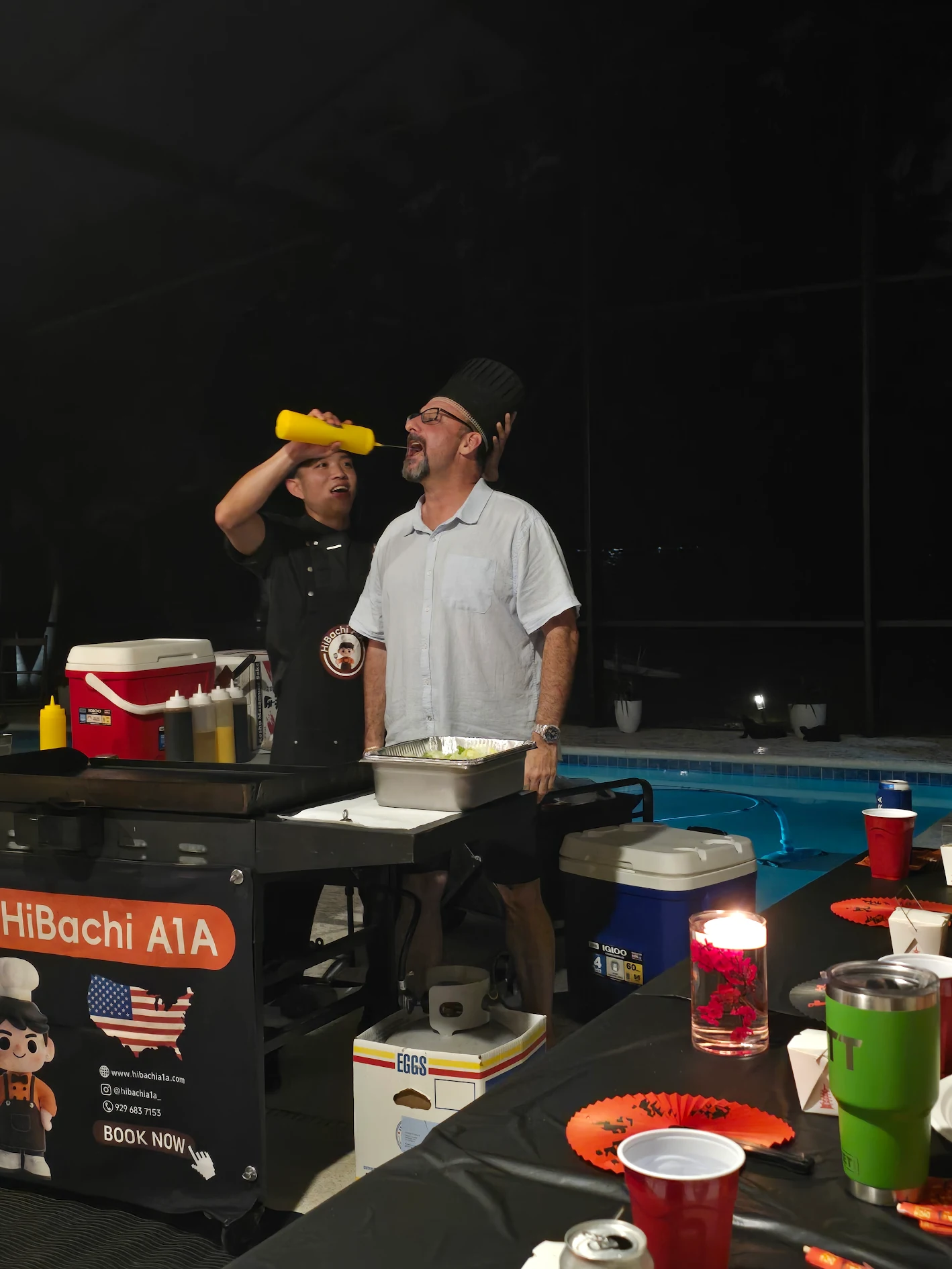
Mobile catering operates on economies of scale, but with a catch: most services, including Hibachi A1A, require a minimum of 8 guests for a standard booking. Below that, you’ll pay a “small party fee” of $100–$150 to cover the chef’s time. Conversely, for groups over 20, Hibachi A1A drops the per-person rate by 10–15%. For a 25-person event, the per-person cost can fall to $38, making it comparable to a mid-range restaurant but with far more entertainment value. This is where the “compare” aspect becomes crucial: a 6-person dinner at home might cost you $70 per person, whereas the same 6 people at a restaurant could be $45 each. So mobile catering is not always cheaper — it’s better for medium-to-large gatherings.
What’s Included in the Price: The Full Experience Breakdown
To truly compare costs, you must itemize what’s included. A standard Hibachi A1A package at $45 per person includes:
– Chef’s live cooking show (30–45 minutes of knife tricks, onion volcano, egg toss)
– All food: appetizer (clear soup or salad), hibachi entrée, fried rice, grilled veggies, and dipping sauces
– Disposable or reusable plates, utensils, and napkins
– Table, grill, propane, and complete clean-up (they leave your space spotless)
– Music system for ambiance (optional)
What’s not included: beverages (alcohol or soft drinks), dessert, and gratuity (typically 15–20% is customary, just like a restaurant). If you add these, the real cost per person is closer to $55–$60. Compare that to a restaurant where you’d pay $50–$65 per person after a standard 18% tip and a couple of drinks — the gap narrows significantly. However, at home, you control the alcohol costs, and you don’t have to wait for a table or deal with parking.
Seasonal and Peak-Time Pricing: When You Book Matters
Like any catering service, hibachi pricing fluctuates with demand. Hibachi A1A charges a 20% surcharge for bookings on weekends after 5 PM, holidays (New Year’s Eve, Valentine’s Day, Mother’s Day), and during peak summer months. A Tuesday afternoon event is the cheapest time — you can often negotiate a 10% discount for off-peak bookings. If you’re comparing “how much is a hibachi dinner at home” versus a restaurant, note that restaurants also surge prices on holidays, but mobile catering’s surcharge is more transparent because it’s listed in the contract.
Value Comparison: Restaurant vs. Hibachi A1A Mobile Catering
Let’s do a side-by-side for a 10-person dinner on a Saturday night:
– Restaurant hibachi: $40/person average food + $8 drink + $8 tip (18%) + $6 tax = $62 per person total = $620
– Hibachi A1A mobile: $45/person (standard chicken/shrimp) + $5 tip + $0 travel (within 30 mi) + $0 setup = $50 per person total = $500
You save $120, but you gain privacy, no time limit, and a chef dedicated solely to your group. For a special occasion like an anniversary or birthday, that’s arguably worth more than the $120. Conversely, if you’re only ordering for 4 people, the restaurant is cheaper because the small-party fee kills the mobile value.
Hidden Costs to Watch For: Avoid Surprise Charges
When you ask, “Compare how much is a hibachi dinner at home,” always request a written quote from Hibachi A1A (or any service) that includes:
– Fuel surcharge (some companies add $15–$25 if gas prices spike)
– Stairs or elevator fee (if the chef must haul equipment up multiple floors, add $25)
– Cancellation policy (non-refundable deposit of $100–$200, typical)
– Grill surface fee (if you have a non-standard countertop that requires a special grill mat)
Hibachi A1A is upfront about these — their online booking form itemizes every possible charge. But lesser-known services often hide them in fine print. Always ask: “Is my quote all-inclusive?” and get it in writing.
Final Verdict: Is Mobile Hibachi Worth the Price?
After comparing all factors — per-person cost, travel fees, ingredient quality, group size, and hidden charges — the answer is nuanced. For groups of 8 to 30 people, mobile hibachi catering like Hibachi A1A typically costs 10–20% less than a comparable restaurant experience, while offering superior entertainment and customization. For smaller groups or those on a strict budget, a restaurant wins on raw price. But the intangible value — the chef’s performance in your living room, the ability to customize spice levels and allergens, and the absence of a waitlist — often justifies the premium. The best approach is to request a personalized quote from Hibachi A1A, compare it against your local hibachi restaurant’s estimated bill, and then decide based on what matters more: convenience or cost. In most cases, for a celebratory dinner that’s meant to impress, mobile catering is the smarter investment.